


Stages of Manufacturing uPVC Doors and Windows
uPVC doors and windows
The journey of manufacturing uPVC doors and windows at WindoStyle begins with a series of precise production stages that ensure a strong, well-insulated product with a long service life. First, high-quality uPVC raw materials are carefully selected and accurately cut using advanced cutting machines to ensure precise dimensions. Next, the internal galvanized steel reinforcement sections are prepared, which play a key role in enhancing the structural strength of the window and improving its resistance to wind pressure and external loads.
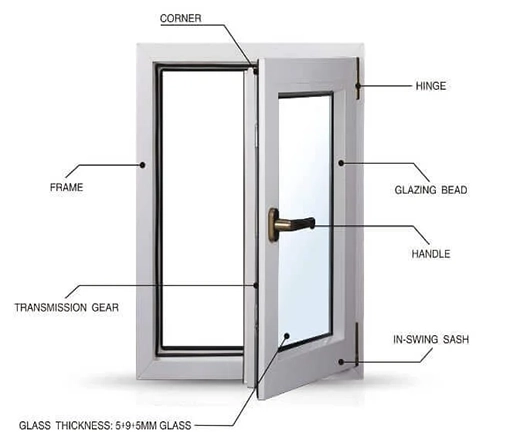
- Profiles: Made from uPVC (unplasticized polyvinyl chloride), making them lightweight and rust-resistant.
- Glass: Single or double, often double-glazed, enhancing insulation.
- Reinforcements: Galvanized steel is used to strengthen and support the profile, increasing its durability.
The following are the manufacturing stages of uPVC doors and windows and the machines used in each process:
Manufacturing Stages uPVC doors and windows
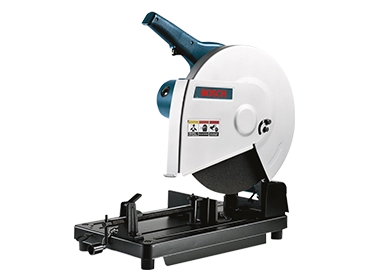
Stage (5)
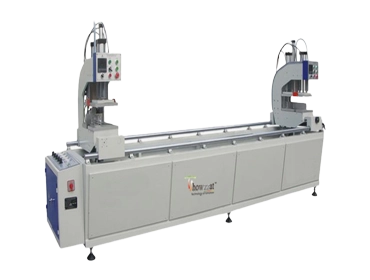
Stage (6)
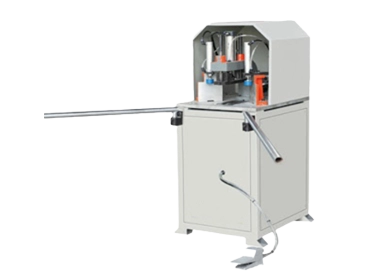
Stage (7)
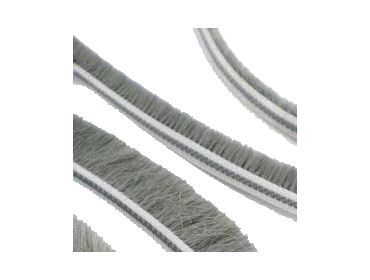
Stage (8)
Stage (9)
Stage (10)
Stage (11)
Stage (12)
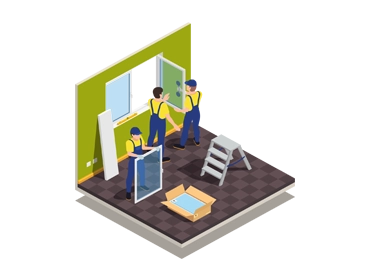
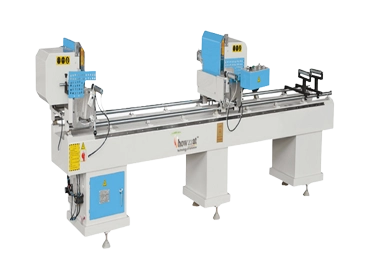
Stage (1): Cutting uPVC Profiles

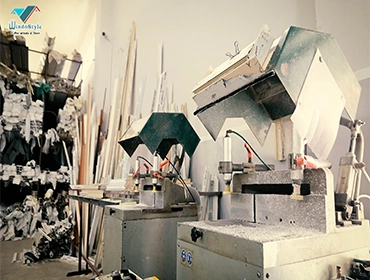
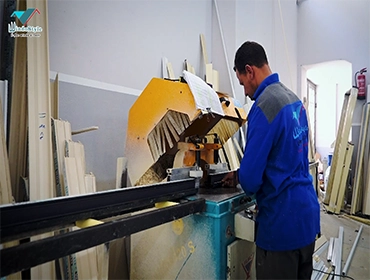
The first step in the manufacturing of uPVC doors and windows is the cutting of the uPVC profiles, including the frame, sash, mullion, glazing bead, and insect screen sash. This is a fundamental stage in the production of uPVC façades, doors, and windows. Therefore:
- We pay close attention to the precise measurements of the wall opening, on which uPVC windows, doors, and uPVC facades are installed.
- We share with the client the most suitable design drawings according to the wall opening size to maximize its benefit. There are also flexible options based on each client’s needs and budget.
- The accuracy of profile corner cutting has a very important impact on achieving high-quality uPVC windows and doors with excellent performance.
- The saw blade and operating platform must be kept dry and clean, otherwise it will affect the subsequent processing performance in uPVC window manufacturing when cutting the uPVC window frame.

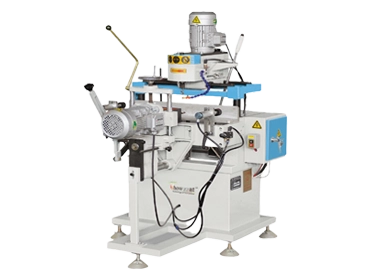
Stage (2): Drilling Drainage Holes

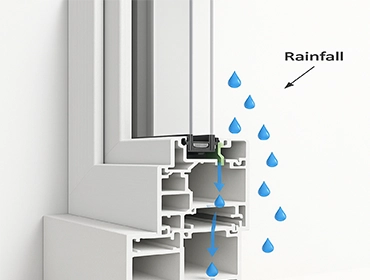
We always ensure that our uPVC doors and windows deliver excellent performance against rainwater and any other water exposure. That is why, at WindoStyle, we:
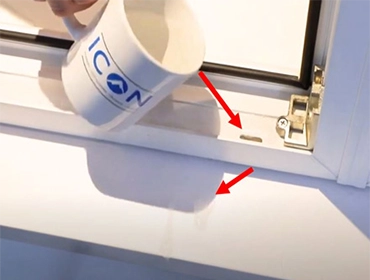
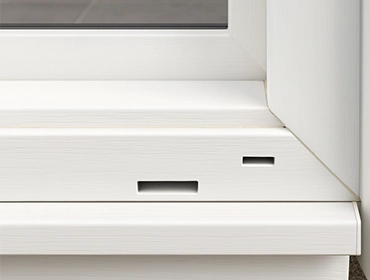
- We provide the necessary drainage openings to allow water to exit, while also creating a pressure-balancing hole on the profiles to ensure smooth water flow according to the location and function of each hole.
- The holes include internal drainage openings, internal pressure-balancing openings, and external drainage openings.
Where and how many holes should we create?
We clearly determine where the drainage holes and pressure equalization holes should be made, as well as the required number of each, during the manufacturing process of uPVC doors and windows.
Before we begin, we must know the areas where holes should not be made.
>>> Some key points we need to pay attention to
- Do not connect the drainage hole and the internal reinforcement steel in the uPVC window. If this happens, rainwater will seep into the main cavity, causing the steel to rust.
- The drainage holes should be located at the lowest point of the cavity, as this helps prevent water accumulation inside the profiles.
- There should be a gap between the internal drainage hole and the external drainage hole.
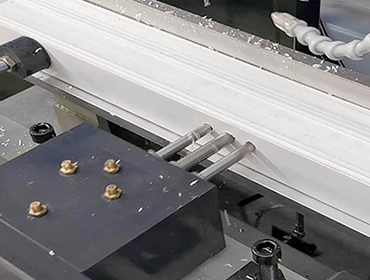
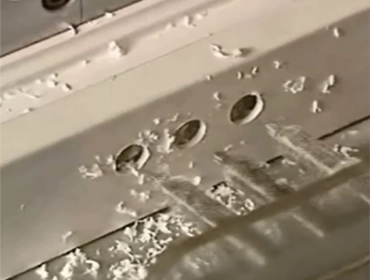
Stage (3): Drilling Accessory Holes
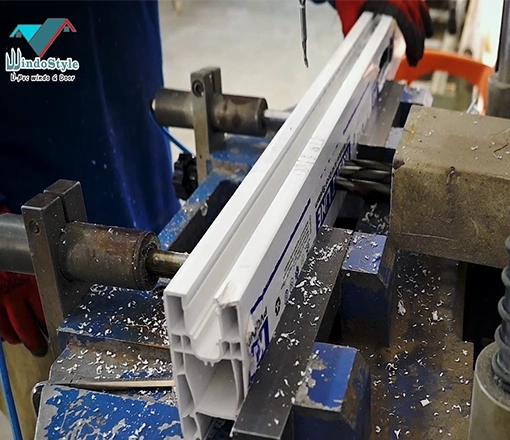
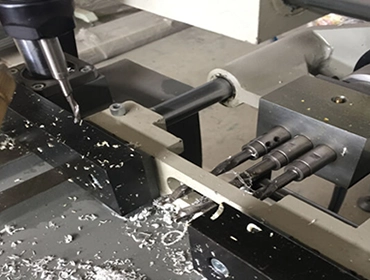
We need to make some mounting holes. Accessories On the sectors in the process Manufacturing UPVC doors and windows Here we usually make these openings on the window sections.
1- How to create an accessory mounting hole?
There are several methods to create these holes, but we usually use a drilling machine or a standard manufacturing device.
2- What type of accessory mounting hole should we create?
We usually create the lock hole, handle hole, and the special cylinder hole in door manufacturing. These holes can be made using the template on the_
We must also drill the hole in the correct position and ensure it is smooth and free of burrs, which is essential for accurate accessory installation.
Stage (4): Reinforcement Steel Installation

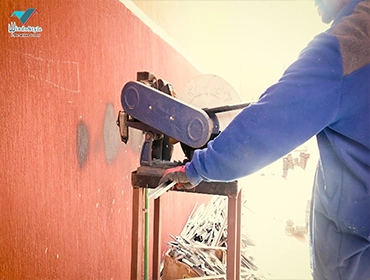
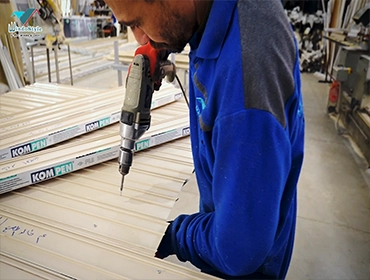
Function of Reinforcement Steel
- First, improving rigidity and strength Windows and doors made of uPVC
- Second, to prevent deformation and, moreover, to make accessory installation more secure.
Technical Requirements for Reinforcement Steel
- The surface of the iron is treated with an anti-corrosion coating or zinc to prevent rusting.
The size and shape of the reinforcement steel.
- The reinforcing steel is installed inside the main chamber of the profiles during the manufacturing of a uPVC window or a uPVC door.
- The clearance between the main cavity of the reinforcement steel and the uPVC profiles is 0.51 mm.
- This gap makes the installation process easier to restore after the window is compressed.
- The reinforcement steel must be shaped according to the profile cavity and type.
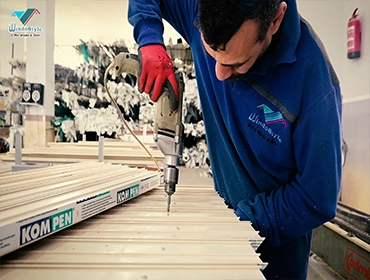
Stage (5): uPVC Profile Welding
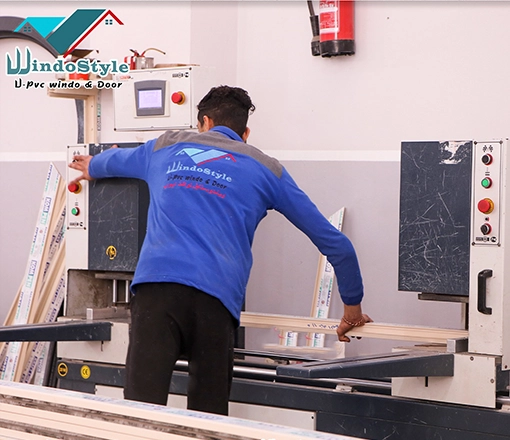
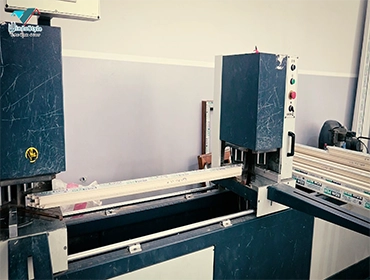
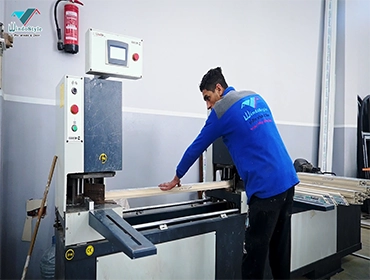
Screws are not used to assemble the corners of uPVC doors and windows. Instead, the profile ends are thermally welded using a specialized welding machine under controlled pressure. The welding is performed at the same temperature used during the profile extrusion process, allowing the two welded ends to fuse into a single, homogeneous piece.
This is the opposite for windows made of aluminum or wood, where the window corners are assembled using parts joined with nails, which may be affected during installation or after use.
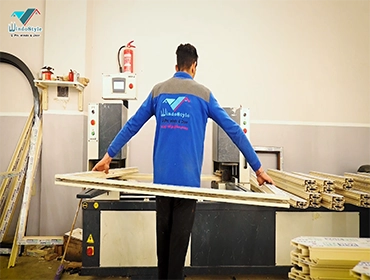
Stage (6): Cleaning uPVC Profile Corners
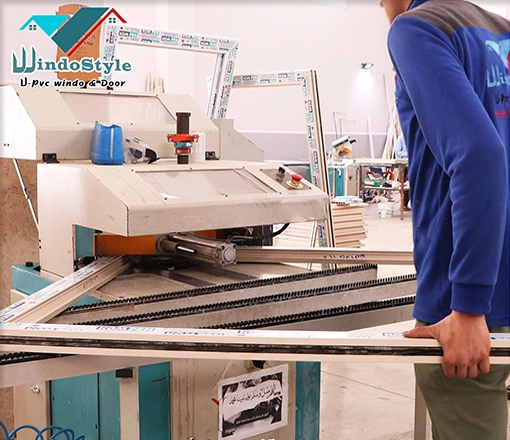
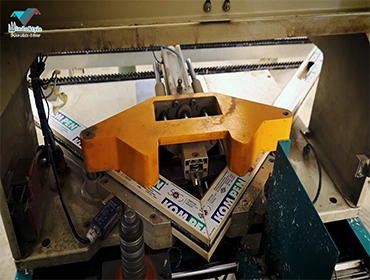
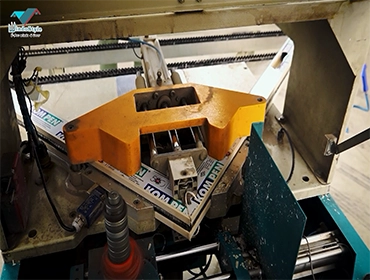
After welding, the weld surface will have an excess weld protrusion during the manufacturing process of UPVC doors and windows. To avoid compromising the window's functionality and aesthetics, the corner needs to be cleaned.
For casement windows, excess weld buildup will affect the leak resistance between the sash frame and the window frame.
For sliding windows, excess weld buildup on the welded profile will affect the sliding of the sash panels.
We remove the excess weld material visible on the outer surfaces of both the frame and the sash to preserve the aesthetic appearance, prevent air and water leakage, and ensure the smooth operation of the associated hardware and accessories.
The four sharp corners are cleaned to prevent stress during window assembly and installation, as well as to preserve aesthetics and avoid damage to the handles during opening and closing.
Additionally, all weld excesses that affect the appearance and the installation of accessories must be cleaned.
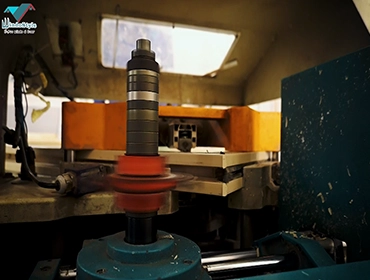
Stage (7): Installing Dust Sealing Sash
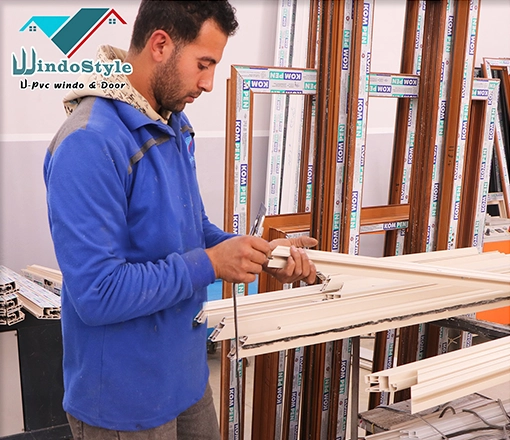
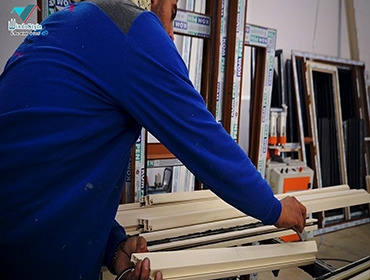
uPVC profile weatherstripping is usually installed in sliding uPVC doors and windows. It is a strip of felt used to prevent water and dust from entering.
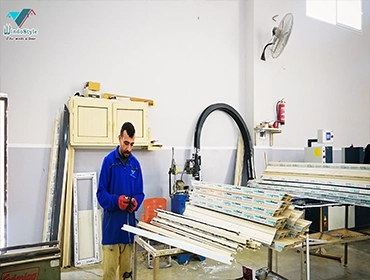
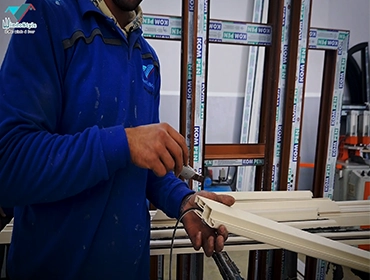
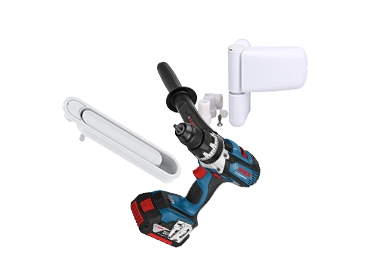
Stage (8): Installing Accessories
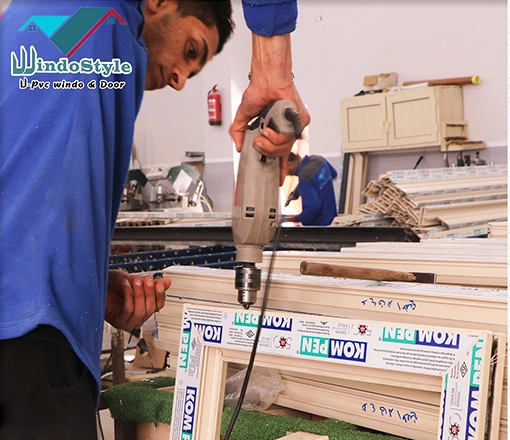
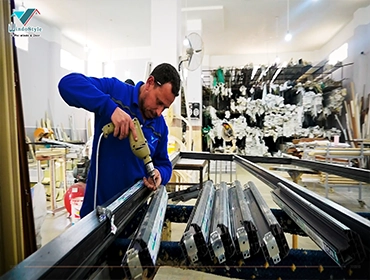
We select the appropriate hardware and accessory components according to the structure and design of the uPVC doors and windows, whether they are sliding, casement, hinged, or any other type of uPVC window system.
At WindoStyle, as a manufacturer of uPVC doors and windows committed to quality, we believe that using high-quality uPVC window hardware and accessories is essential to ensuring long-lasting performance, durability, and reliable operation.
uPVC Window Accessories:
- uPVC Window Hinges are used to ensure smooth cooperation between the frame and sash, and to support the weight of the window sash as well as wind pressure. uPVC window hinges are made from uPVC material.
- uPVC Window Handles are primarily used to open and close uPVC windows and doors. They are selected according to the design of the uPVC window.
- uPVC Window Espagnolettes are used to lock the window or door at multiple locking points with the use of handles. They are selected according to the design and dimensions of the uPVC window.
- uPVC Window Rollers are used to move the window or door sash along the frame track. The roller surface must be smooth and free of any defects.
- uPVC Window Dust Seals are used in sliding windows on the frame or door between the moving sashes to block dust and prevent it from entering.
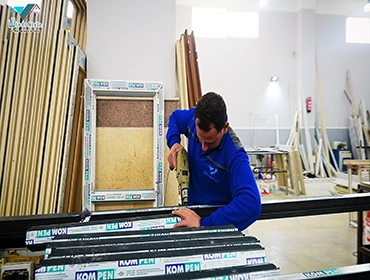
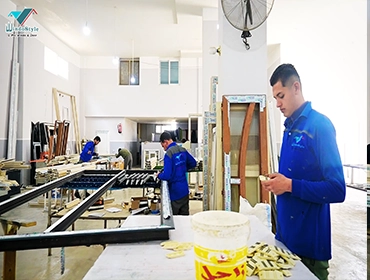
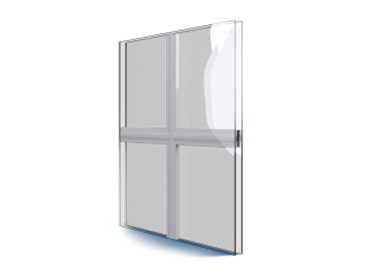
Stage (9): Glass Installation
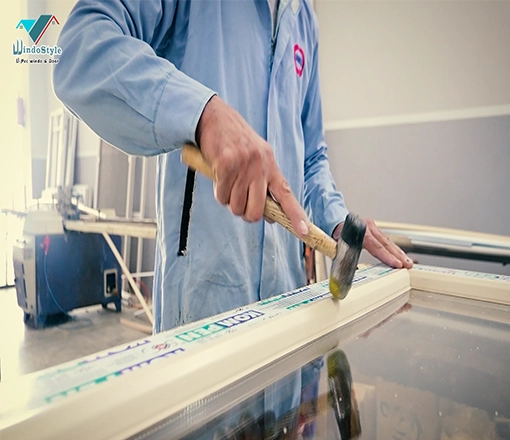
Glass beads are installed in the sashes that hold the glass before inserting the glass itself. Glass beads are solid plastic pieces, 3 inches (7.6 cm) long. One piece is inserted at the top and bottom of each glass sash that comes with the uPVC window. This ensures that the glass panes fit correctly into the sashes during installation.
Available Glass: Single glass, double glass, and insulated glass.
Depending on the gas inside the insulated glass, it is classified as either standard glass or double glass filled with inert gas.
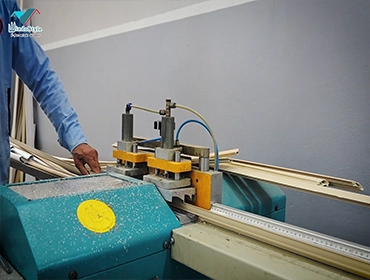
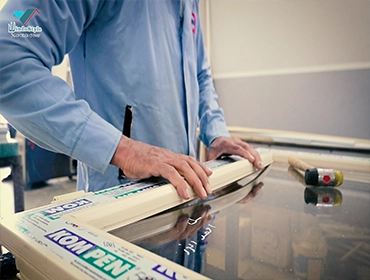
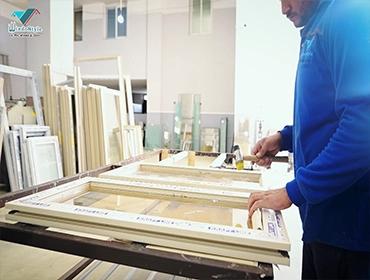
Stage (10): Product Inspection and Review
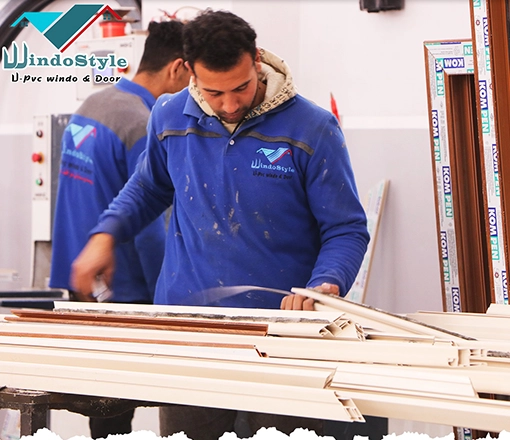
As a trusted supplier of uPVC windows, we perform comprehensive quality inspections throughout the manufacturing process of uPVC doors and windows to ensure that every product meets our quality standards before delivery.
Final Product Inspection in uPVC Window Manufacturing
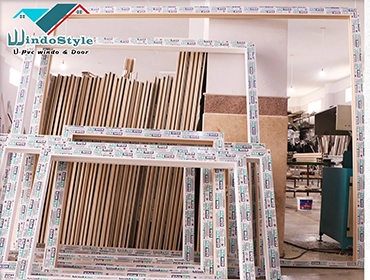
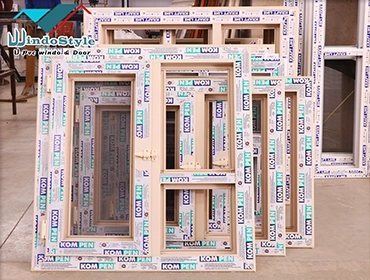
After assembling the windows, before leaving the factory, some samples must be taken according to the different types and dimensions of the windows.
There are also several other elements that must be inspected before leaving the factory.
1. Corner weld strength.
2. Installation of reinforcement steel.
3. Installation of accessories.
4. Opening and closing force of the lock and handle.
5. Opening and closing force of the sash.
6. Inspect the glass installation and ensure its integrity.
7. External appearance of the uPVC window.

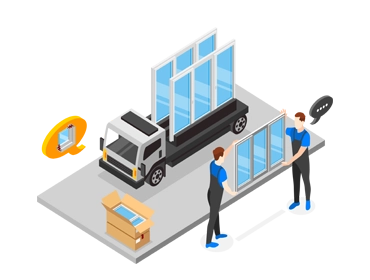
Stage (11): Window Transport and Delivery
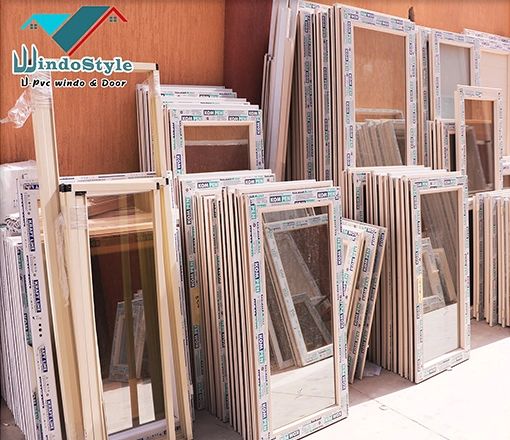
- Doors and windows must be placed in well-ventilated areas, protected from rain, and kept dry and level.
- In manufacturing uPVC doors and windows Outdoor storage is not permitted, and they must not be allowed to come into contact with corrosive materials.
- All windows must also be placed vertically according to the installation direction, with the vertical angle not less than 70 degrees. Flat stacking directly on the ground is not allowed.
- In the manufacturing of windows and doors made of uPVC, the windows must be loaded and unloaded gently.
- It is very important to arrange the doors properly in the cart when loading windows and doors.
- We maintain stability to prevent movement and vibration and to avoid contact between the accessories and the glass.
- We use a soft material to separate the windows and place them vertically in an organized manner.
Stage (12): uPVC Window Installation

The installation stage is one of the most critical phases in the production of uPVC doors and windows, as the correct installation directly affects the overall performance and functionality of the finished unit. Therefore, we are committed to employing a team of highly skilled and experienced installation technicians specializing in uPVC doors and windows.
1 – The frame is injected with foam from the outside before installation in the wall opening to ensure that all gaps between the frame and the wall are filled, guaranteeing insulation quality and strength.
2 – The frame is placed in its designated opening and then leveled using a spirit level to achieve maximum balance, after which the frame is fixed to the wall using the special installation screws.
3 – The foam is trimmed and any resulting debris is removed, then silicone is applied to ensure proper insulation.
4 – The sashes and unit accessories are installed, the protective stickers on the profiles are removed, the unit is cleaned, and then delivered to the client.
uPVC WindowsEasy to useCost-effectiveMultiple optionsAesthetically pleasingWith free maintenanceFrom WindoStyle
We offer you the expertise gained over twenty years in the manufacturing of uPVC doors and windows. This experience allows us to provide you with tried, tested, and certified products. We offer a complete package – pre-sale consultations, a wide range of products, on-site measurements, installation, and after-sales service.
FAQ
If you are looking for windows and doors that offer Good sound insulation , then WindoStyle Here for you. We are the preferred brand for buying energy-efficient and soundproof windows and doors in Egypt. Our building fittings are designed with multi-chamber sections, airtight seals, fused-welded corners, double-glazed insulated glass, etc., which contribute to their soundproofing.
The cost of new soundproof windows and doors may vary depending on the configuration you choose. WindoStyleYou have options in glass, you also have options like Sliding doors وhinged windows وFixed windows And more. If you're planning on getting new windows and doors and want to know the cost, get in touch. One of our expert team members will help you with all your questions.
Applying sealants and using waterproofing materials to doors and windows is crucial for protecting them from rainwater leaks. Thanks to the innovative design offered by [Company Name] WindoStyle For doors and windows, you can effectively prevent rainwater leakage and protect against damage.
Windows and doors are required WindoStyle Minimal maintenance is required. They are rot-resistant, dustproof, and warp-resistant. These doors are weather- and storm-proof, provide insulation against rainwater, and are unaffected by heat or sunlight. They will remain in good, like-new condition for years to come. All that is needed is routine cleaning to remove dirt and dust from the surface and channels, as these doors and windows are designed for a lifetime of performance.
Doors and Windows WindoStyle It doesn't require much maintenance. Routinely cleaning dirt and dust from the surface and channels will keep your doors and windows looking their best. WindoStyle It's in excellent condition and will look brand new year after year. It's rot-resistant, won't corrode, and maintains its shape. Designed for a lifetime of performance, it requires minimal cost and effort to maintain.
If you feel that Doors and Windows WindoStyle It doesn't work properly If you experience any resistance or difficulty operating the device, it's time for a maintenance check. In such cases, we recommend contacting customer service. WindoStyle To schedule a service and maintenance inspection to ensure that your doors and windows are working properly.
uPVC windows and doors are renowned for their exceptional resistance to even heavy rain and wind. They are designed uPVC windows and doors from WindoStyle Using innovative design and technology, it is the perfect solution to prevent rainwater from entering and to keep your home safe.
uPVC doors and windows have been tested from WindoStyle In terms of reliability and durability against harsh weather conditions, uPVC doors and windows are designed using unique solutions such as steel reinforcements and multiple locking points. WindoStyle Strong protection against wind, storms, and rainwater leaks. Keep your home safe and secure.
Windows and doors require WindoStyle Minimal maintenance is required. Precision-engineered for a tight, gap-free seal, these doors and windows are corrosion-resistant, rust-proof, dustproof, and weatherproof. Routine cleaning to remove dirt and dust from the surface and channels is all that's needed; they are designed for a lifetime of performance.
Windows and doors are made WindoStyle Made from highly durable materials that offer long lifespan and high performance. Furthermore, windows and doors require WindoStyle Minimal maintenance and it will remain in good, like-new condition for years to come.
Yes, you can install a bug net from the company. WindoStyle Protect your home from insects, pests, and mosquitoes. These nets are easy to open and close, allowing fresh air to circulate while preventing insects from entering.
Energy efficiency is one of the key factors when choosing doors and windows made of uPVC For your home. They offer benefits such as lower electricity bills, improved door and window performance, reduced maintenance, and more. Doors and windows are designed WindoStyle Made of uPVC With double-insulated glass and multiple locking points, all of this makes these building installations energy-efficient and safe.